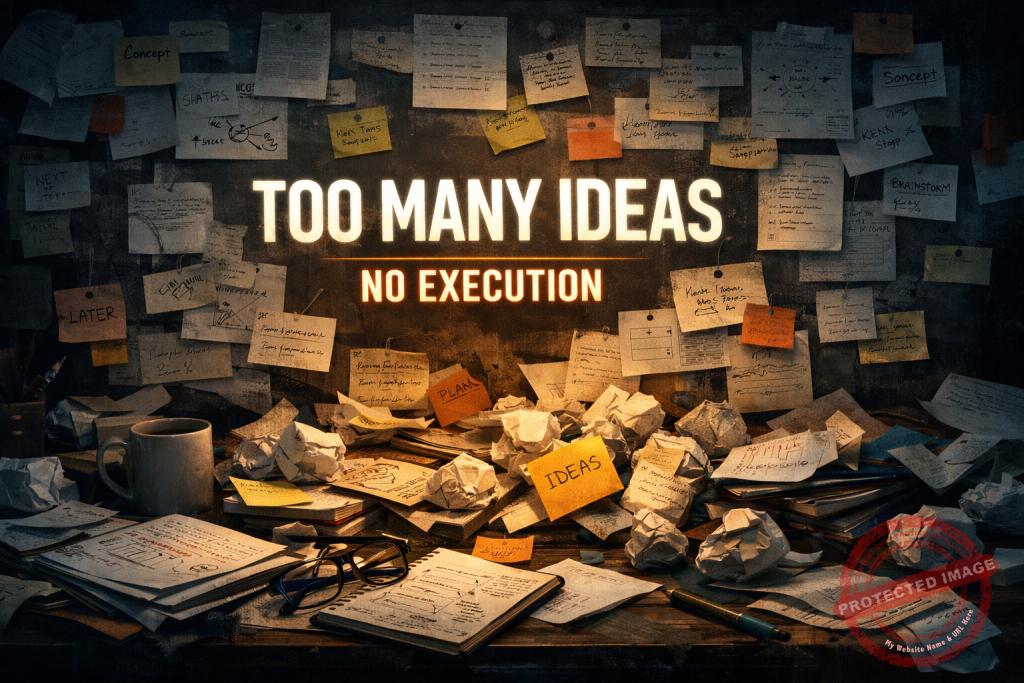
Why Online Projects Fail — And How to Fix It With a System
Most online projects do not fail because of one dramatic mistake.
They fail because of a pattern.
A quiet pattern that repeats in the background until the project slows down, loses direction, and eventually gets abandoned.
If you have ever started a project, put real effort in, and still felt like nothing was working, the problem may not be your effort.
The real reason why online projects fail is usually structure.
Not lack of ideas.
Not lack of potential.
Not because you are incapable.
Most of the time, the work is simply disconnected.
If everything feels scattered, start with the XCopp System Starter first:
Why Online Projects Fail: The Hidden Pattern
Failure does not usually look like failure at first.
It looks like effort.
It looks like progress.
It looks like you are doing the right things.
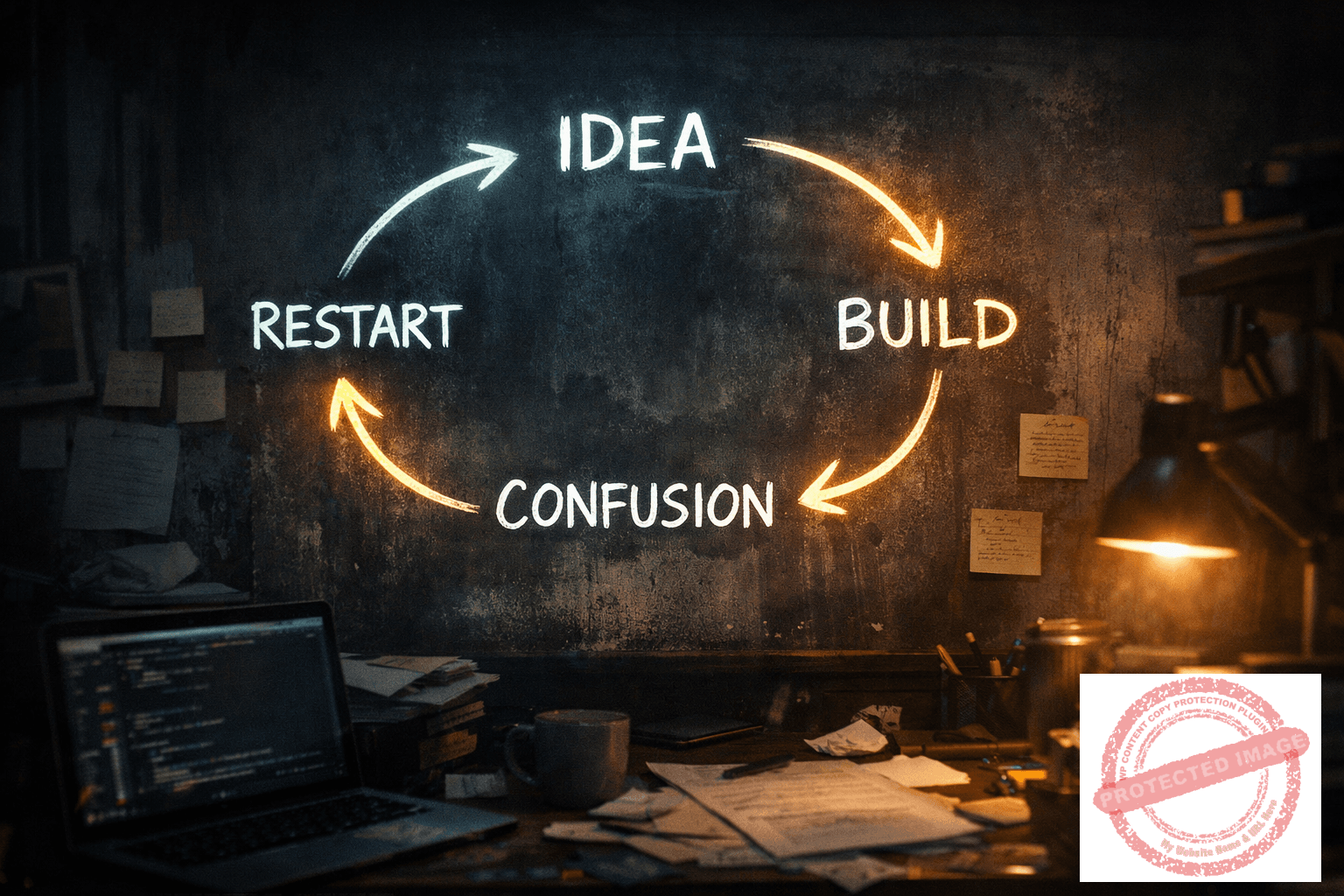
But underneath, the same loop is running:
- you get an idea
- you start building
- you hit confusion
- you try something else
- you lose direction
- you restart
And that loop repeats.
Over and over.
Not because you are doing nothing — but because nothing is connected.
This is the part most people miss.
They think they need a better idea.
They do not.
They need a better system.
The 5 Real Reasons Most Online Projects Fail
Let’s break this down properly.
Not surface-level advice.
Not another “just be consistent” lecture.
The real reasons.
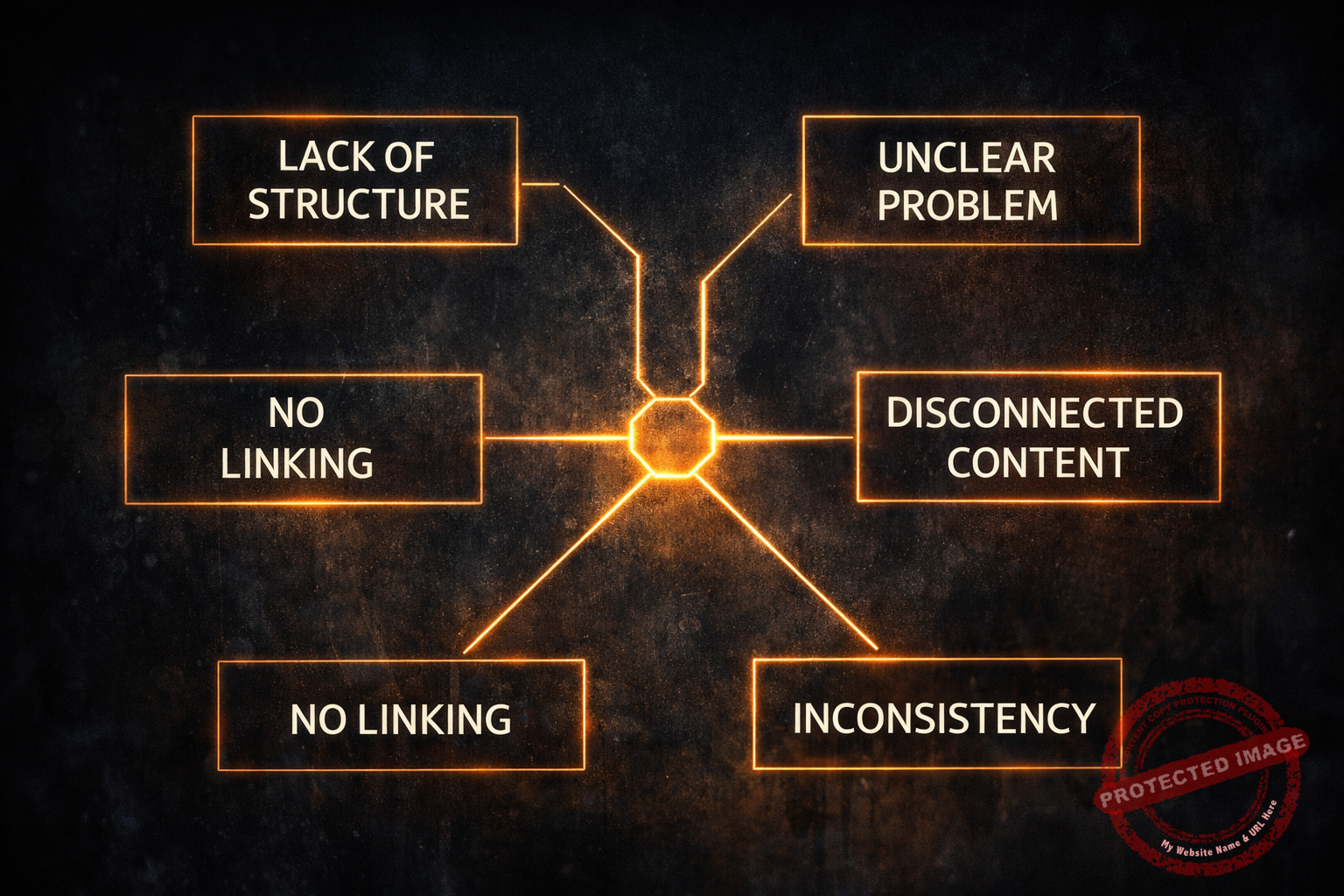
1. There Is No Structure Behind the Work
Most online projects are built randomly.
Pages exist, but they do not connect.
Content exists, but it does not build anything.
Ideas exist, but they do not become a clear system.
Without structure, effort does not stack.
This is where most projects break before they ever start working.
You can publish, tweak, edit, redesign, and keep “working on it” — but if the work is not connected, it will not compound.
2. The Problem Is Not Clear Enough
People often build around vague ideas instead of real problems.
That leads to:
- unclear content
- weak messaging
- confused pages
- no real audience connection
If the problem is unclear, everything downstream becomes weaker.
Your content becomes vague.
Your offer becomes vague.
Your next step becomes vague.
If the problem is not clear, nothing else will be.
3. Content Is Created Without a System
This is one of the biggest reasons why online projects fail.
Posts are written one by one.
No structure.
No layering.
No connection.
Which means every piece starts from zero.
That is why growth feels slow.
Because nothing is building on top of anything else.
Inside XCopp, content is not treated as random output.
It is part of a system:
- Intel — real lessons and project thinking
- Systems — structure, architecture, and frameworks
- Start Here — the main orientation point
When content connects, it becomes more than information.
It becomes infrastructure.
4. Nothing Is Linked Together
This is a hidden killer.
Content exists, but it is isolated.
Pages exist, but they do not guide people anywhere.
There is no path.
No flow.
No system.
Which means:
- visitors get lost
- search engines get weaker signals
- authority does not build properly
- good content gets wasted
Connection is what creates momentum.
A strong online project should guide people clearly from one useful step to the next.
Not trap them in a maze.
Not leave them guessing.
Not make them work harder than they need to.
5. Consistency Collapses Because There Is No Anchor
Projects often start with energy.
Then life happens.
Motivation drops.
Direction fades.
The work becomes messy.
And eventually, the project gets left behind.
That does not always happen because people are lazy.
It often happens because there is no structure strong enough to hold the work when energy dips.
Without structure:
- direction disappears
- motivation drops
- progress stalls
- the project becomes another unfinished thing
Consistency is a result of clarity — not motivation.
Why Most Advice Does Not Fix the Problem
Most online advice focuses on tactics.
SEO tricks.
Content hacks.
Growth shortcuts.
Button colours.
Posting schedules.
None of those things are automatically wrong.
But they do not fix the core problem.
Tactics without structure do not compound.
They create activity.
They may create short bursts of movement.
But if the project underneath is disconnected, the gains fade.
That is why people keep trying new things.
Because nothing sticks.
This is also why helpful content matters. Google’s own guidance points toward creating content for people first, not content built only to chase search engines: Google’s helpful content guidance.
That lines up with how XCopp is built:
truth first, structure second, execution third.
The Fix: Start Thinking in Systems
This is where the shift happens.
You stop asking:
“What should I do next?”
And start asking:
“What system am I building?”
That one question changes the work.
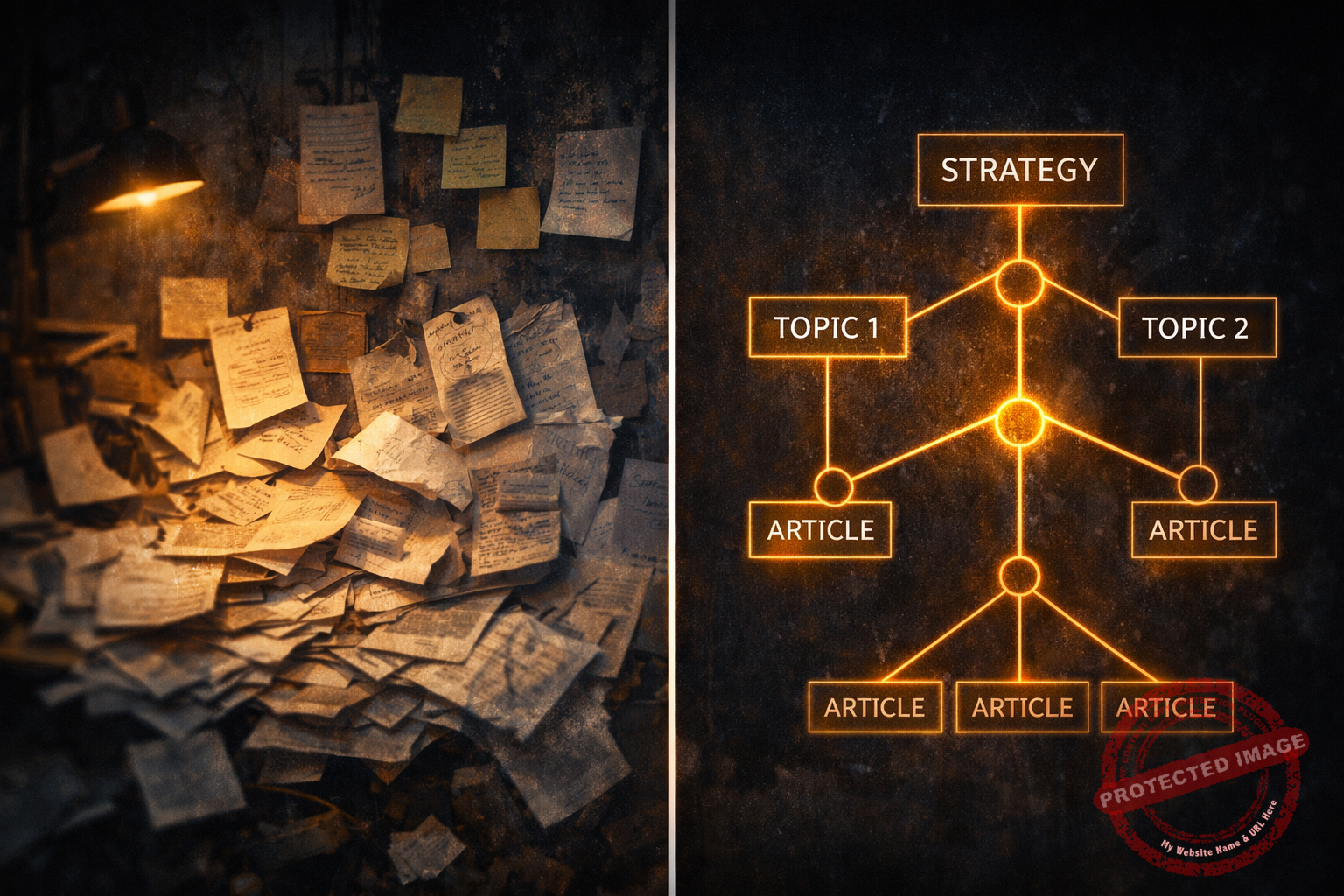
Instead of random actions, you begin building:
- a clear entry point
- structured content layers
- connected pages
- a useful email path
- a guided flow for visitors
This is the model used inside XCopp:
Start Here → Intel → Systems → Starter → Join
Everything connects.
Everything has a job.
Nothing is just floating around trying to look useful.
The Reality Most People Avoid
This is not complicated.
But it is not easy either.
Because it requires:
- discipline
- patience
- honesty
- long-term thinking
Most people avoid that.
They keep chasing tactics.
They keep restarting.
They keep guessing.
And they stay trapped in the same loop.
The harder truth is this:
If the way you are building does not change, the result probably will not change either.
That is not condemnation.
That is correction.
And correction is useful if you actually act on it.
What Changes When You Build With Structure
When you build with a system, the work starts to behave differently.
Things begin to connect.
Progress becomes visible.
Content starts supporting other content.
Pages guide people instead of confusing them.
Email becomes a path instead of a random broadcast.
You stop guessing.
You start building properly.
And that is when online projects begin to work.
- your ideas become clearer
- your content becomes more useful
- your pages become more intentional
- your visitors have a path to follow
- your project has something solid underneath it
This is not magic.
It is structure.
Boring? Maybe.
Effective? Absolutely.

The Final Shift
You do not need a better idea.
You do not need another strategy.
You do not need more random information.
You need a better system.
That is the difference between projects that fail and projects that actually have a chance to grow.
Not because the system does the work for you.
It does not.
You still have to build.
You still have to show up.
You still have to stay honest with the work.
But when the system is clear, the work finally has somewhere to go.
What To Do Next
If this helped, do not just nod and move on.
Use it.
Start here:
Then use the main orientation page:
Go deeper into the structure:
Or stay connected:
Start With the XCopp System Starter
If you are done operating in fragments, this is the cleanest place to begin.
Get the starter, clear the noise, and take one real next step.
This only works if you build it.