
How to Build Online Projects That Actually Work (Using a Real System)
Most people try to build online projects by doing more.
More content.
More tools.
More pages.
More ideas.
But more effort does not fix a broken structure.
If the project is scattered underneath, extra work just adds more noise to the pile.
The real shift is simple: stop building random pages and start building systems.
That is what separates online projects that drift from online projects that actually work.
If everything feels scattered, start with the XCopp System Starter first:

Why Most People Struggle to Build Online Projects
Most online projects do not fail instantly.
They fade.
Slowly.
Quietly.
Until the person building them stops opening the dashboard, stops publishing, stops improving, and eventually tells themselves the project “just didn’t work”.
But that is rarely the full truth.
The project did not fail because the idea had no value.
It failed because there was no structure strong enough to carry it.
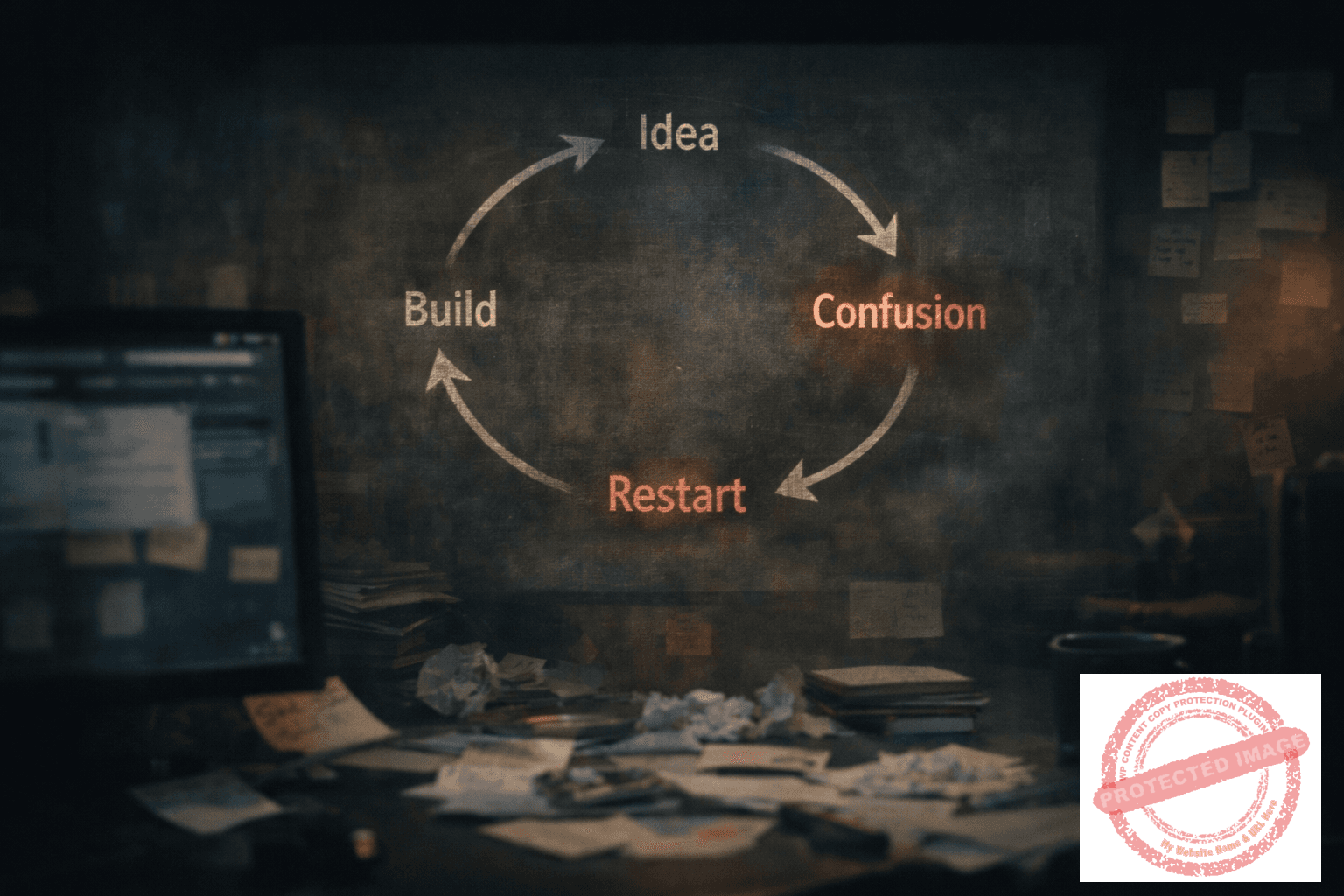
The loop usually looks like this:
- you get an idea
- you start building
- you hit confusion
- you try something else
- you lose direction
- you restart
That loop repeats because nothing is connected.
Each post, page, tool, and idea is treated like a separate thing.
So instead of progress stacking, everything resets.
Effort goes in. Nothing compounds.
If you want the deeper diagnosis, read this next:
What “Working” Actually Means
Most people think a project is working if it looks good.
A clean website.
A few posts.
Maybe some traffic.
But appearance is not progress.
A project is only working if it does something useful, measurable, and repeatable.
That means it should:
- attract the right people
- solve a real problem
- build trust over time
- guide people to the next step
- improve as the system grows
If a project gets traffic but nobody moves, it is not working properly.
If people read but do not understand the next step, the path is weak.
If content exists but does not connect to anything else, it becomes dead weight.
Useful projects move people forward.
That is also why people-first content matters. Google’s own guidance points toward creating helpful content for real users, not just producing pages for search engines: Google helpful content guidance.
The Shift: Stop Building Pages — Start Building Systems
Here is the shift that changes everything:
You are not building a website.
You are building a system.
A page on its own does very little.
A post on its own does very little.
A tool on its own does very little.
But when each part connects to a clear structure, the project starts to behave differently.
It guides.
It teaches.
It captures attention.
It builds trust.
It gives people somewhere useful to go next.
That is how you build online projects that actually have a chance to grow.
The XCopp Model for Building Online Projects
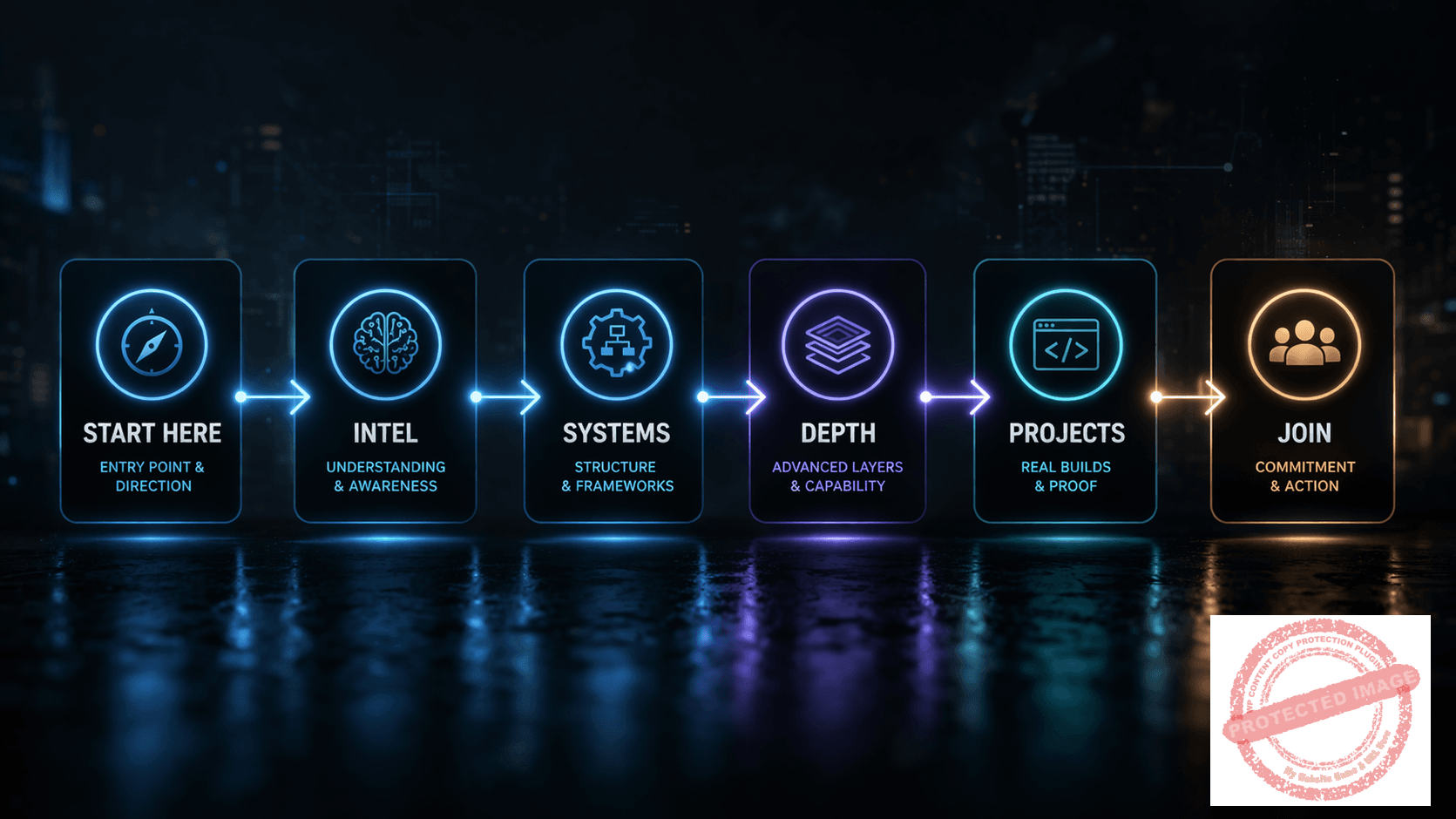
Inside XCopp, the structure is simple:
Start Here → Intel → Systems → Depth → Starter → Join
This is not just navigation.
It is how thinking, content, and action are organised.
1. Start Here — The Entry Point
Every project needs a clear entry point.
People should be able to land and understand:
- what the project is
- who it is for
- what to do next
Without this, visitors drift.
Start Here is the orientation layer.
2. Intel — The Understanding Layer
Intel explains the real problems and lessons behind the work.
No fluff.
No noise.
Just useful thinking from building properly.
Intel builds awareness and understanding.
3. Systems — The Structure Layer
Systems show how things fit together.
Frameworks.
Processes.
Models.
This is where a project becomes more than scattered content.
Systems builds clarity.
4. Depth — The Serious Builder Layer
Not everyone needs depth immediately.
But serious builders eventually do.
- Fragments — smaller tactical pieces
- DataDumps — deeper structured thinking
- BlackBoxes — execution systems
This is where surface understanding becomes capability.
5. Starter and Join — The Capture Layer
Traffic alone is not enough.
Attention alone is not enough.
If someone finds the work useful, they need a clean next step.
That is why XCopp uses the System Starter.
And if they want to stay connected:
The 5-Part Build System
If you want to build online projects properly, use this structure.
1. Start With a Real Problem
Do not start with a trend.
Do not start with a random niche because someone said it was profitable.
Start with a real problem you understand clearly enough to explain.
That could be:
- something you have struggled with
- something you are actively solving
- something your audience clearly needs help with
If the problem is real, the content has a foundation.
2. Build a Clear Entry Point
Your project needs somewhere people can begin.
Not a random homepage trying to do everything.
A true entry point.
This page should answer:
- what is this?
- who is it for?
- where do I go next?
That is why a strong Start Here page matters.
3. Build Content Layers
Do not publish random posts and hope they work.
Organise your content into layers.
Inside XCopp, that looks like this:
- Intel — explain the real problems
- Systems — show the structure
- Depth — go deeper when needed
Each layer has a job.
Each piece fits somewhere.
Nothing is random.
4. Connect Everything
This is where projects start to gain strength.
Every page should guide people somewhere useful.
Every post should connect to related ideas.
Every section should have a reason to exist.
This helps users move through the system.
It also helps search engines understand how the site is structured.
Connection creates momentum.
5. Build, Observe, Document, Improve
This is the loop that turns a small project into a real asset.
- build something real
- observe what happens
- document the lesson
- improve the system
Most people publish and move on.
That is why nothing improves.
Builders refine.
That is the difference.
Why Most People Never Build This Way
The steps are not complicated.
So why do most people never build online projects that actually work?
Because this is not only a strategy problem.
It is a discipline problem.
Most people chase tactics instead of building systems.
They jump between:
- SEO tricks
- content hacks
- new tools
- whatever looks exciting this week
But tactics without structure do not compound.
They create motion.
Not progress.
And when results feel slow, people switch direction again.
New idea.
New plan.
New reset.
Same problem.
Constant restarting kills momentum.
This Is About Discipline, Not Hype
The people who make this work are not always smarter.
They are not using secret knowledge.
They usually do something much simpler:
- pick a direction
- build with structure
- stay consistent
- improve over time
No shortcuts.
No fake urgency.
No chest-beating nonsense.
Just disciplined work under a clear structure.
That lines up with the way XCopp is built:
truth first, structure second, execution third.
The Long-Term Advantage
When you build randomly, everything resets.
New content.
New idea.
New attempt.
No carry-over.
But when you build with a system, your work starts to stack.
Content Starts Compounding
Each piece supports another piece.
Your existing work becomes more valuable over time.
Authority Builds Naturally
You do not need to pretend to be an expert.
You build authority by explaining real problems, documenting real lessons, and connecting useful ideas clearly.
Your Site Becomes Easier to Grow
You know what to create next because the structure shows you where the gaps are.
You are not guessing.
You are filling the system.
You Stop Starting Over
This is the big one.
Most people keep restarting because they have nothing solid underneath them.
With a system, every step forward counts.

The Final Shift
Most people ask the wrong question:
“What should I post next?”
That question keeps you reactive.
It keeps you chasing ideas.
It keeps your content disconnected.
The better question is:
“What system am I building?”
That one question changes the work.
Before creating anything, ask:
- Where does this fit?
- What does it connect to?
- What role does it play?
- What does it help the reader do next?
If it does not fit the system, do not build it.
Simple.
Not always easy.
But simple.
What To Do Next
If you want to build online projects properly, start with clarity.
Use the starter first:
Then orient yourself:
Go deeper into the structure:
And if you want to stay connected:

Start With the XCopp System Starter
If everything feels scattered, this is the cleanest place to begin.
Get the starter, clear the noise, and take one real next step.
No system fixes inaction. Build it properly.