
Remember why you made the decision.
Projects rarely fail because nobody ever made a decision.
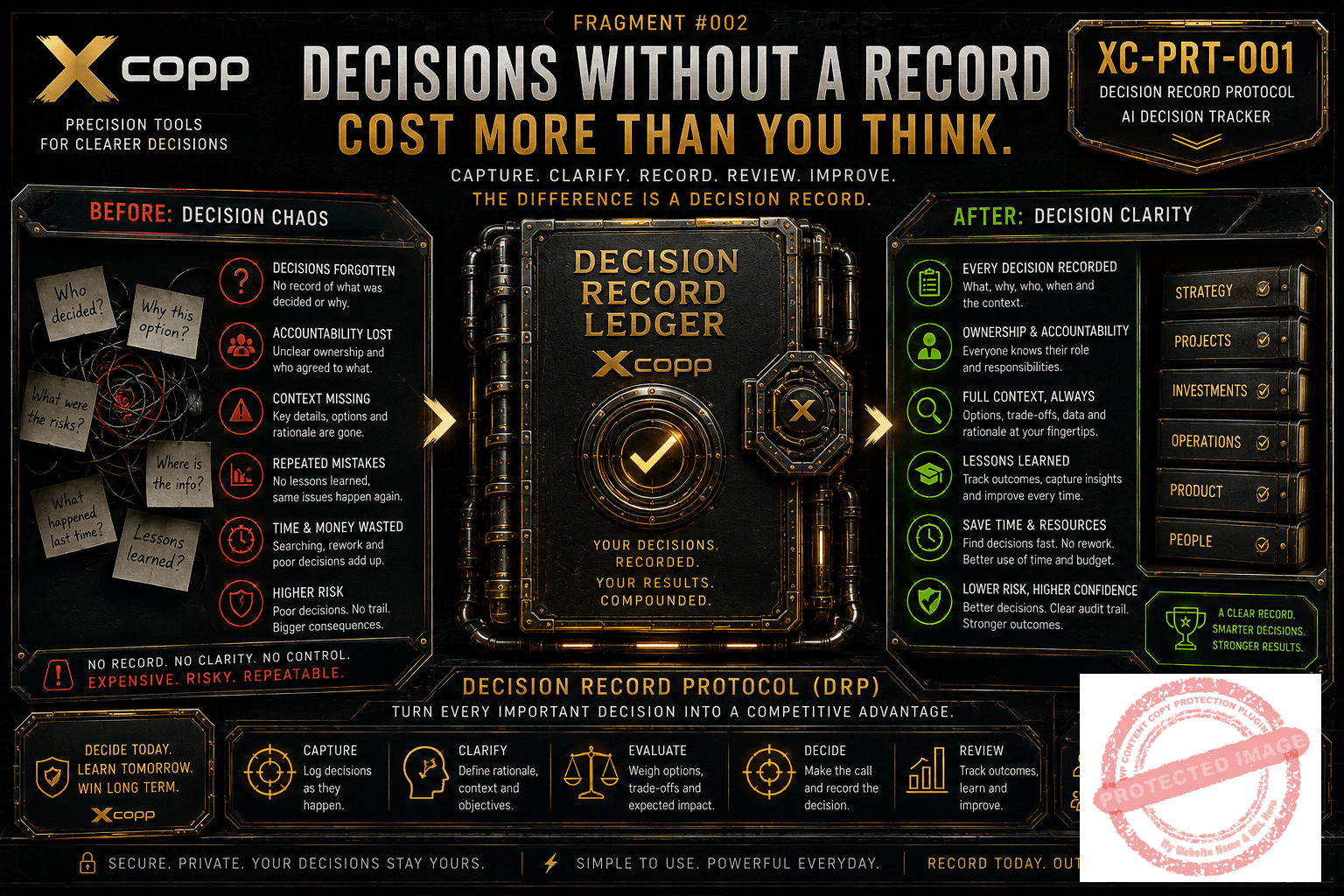
The problem is that weeks or months later nobody can clearly remember:
- what was actually decided;
- why that option won;
- which evidence supported it;
- which assumptions were still unresolved;
- what alternatives were rejected;
- or what would justify changing the decision.
AI conversations make this problem even easier to create. Important decisions can become buried beneath hundreds of messages.
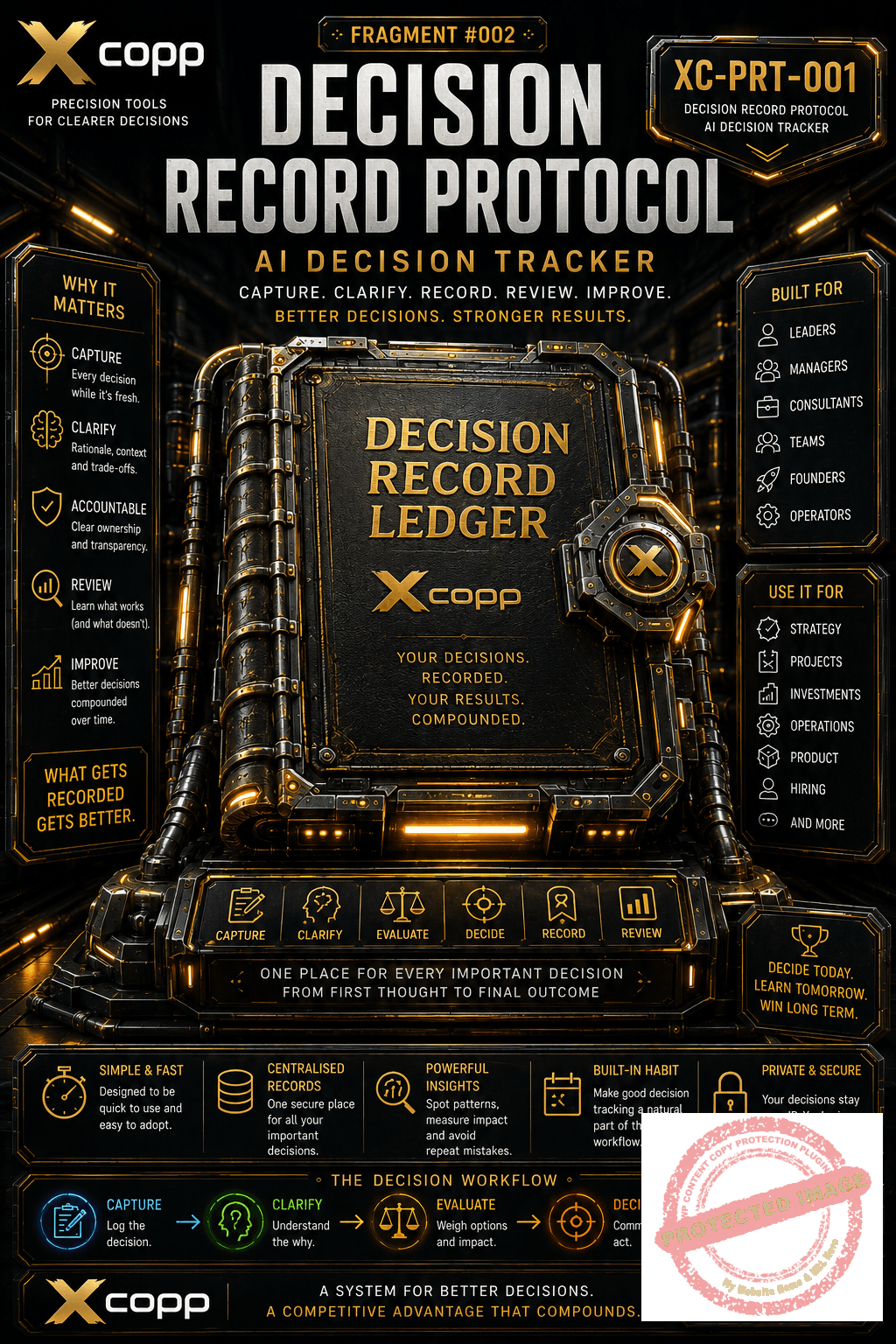
Decision Record Protocol gives those decisions somewhere deliberate to live.
What is the Decision Record Protocol?
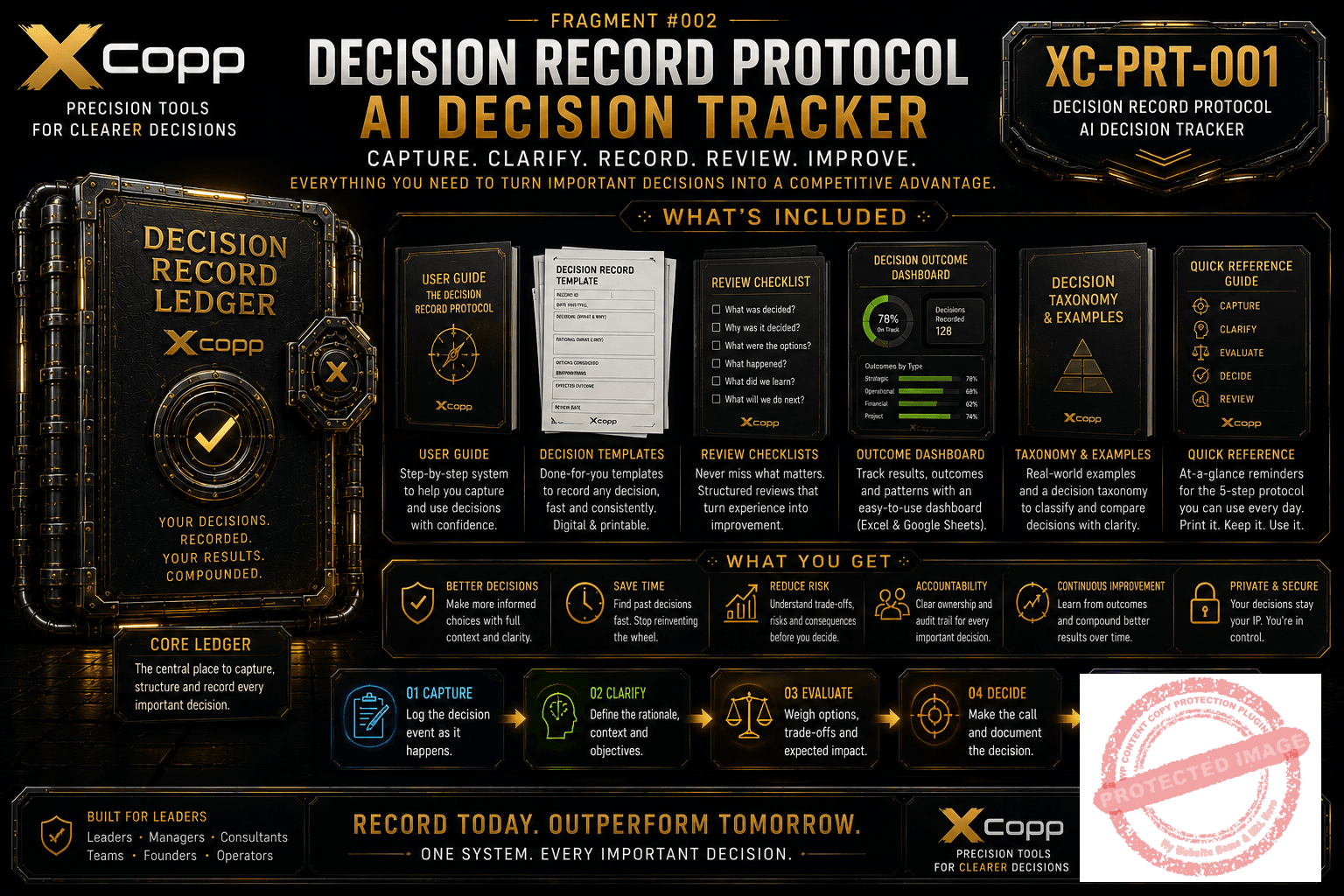
It is a reusable XCopp tool for creating structured records of important decisions.
Instead of recording only:
“We decided to do X.”
you preserve the reasoning surrounding the decision.
That creates a useful reference for your future self, collaborators and AI-assisted project work.
What does a decision record capture?
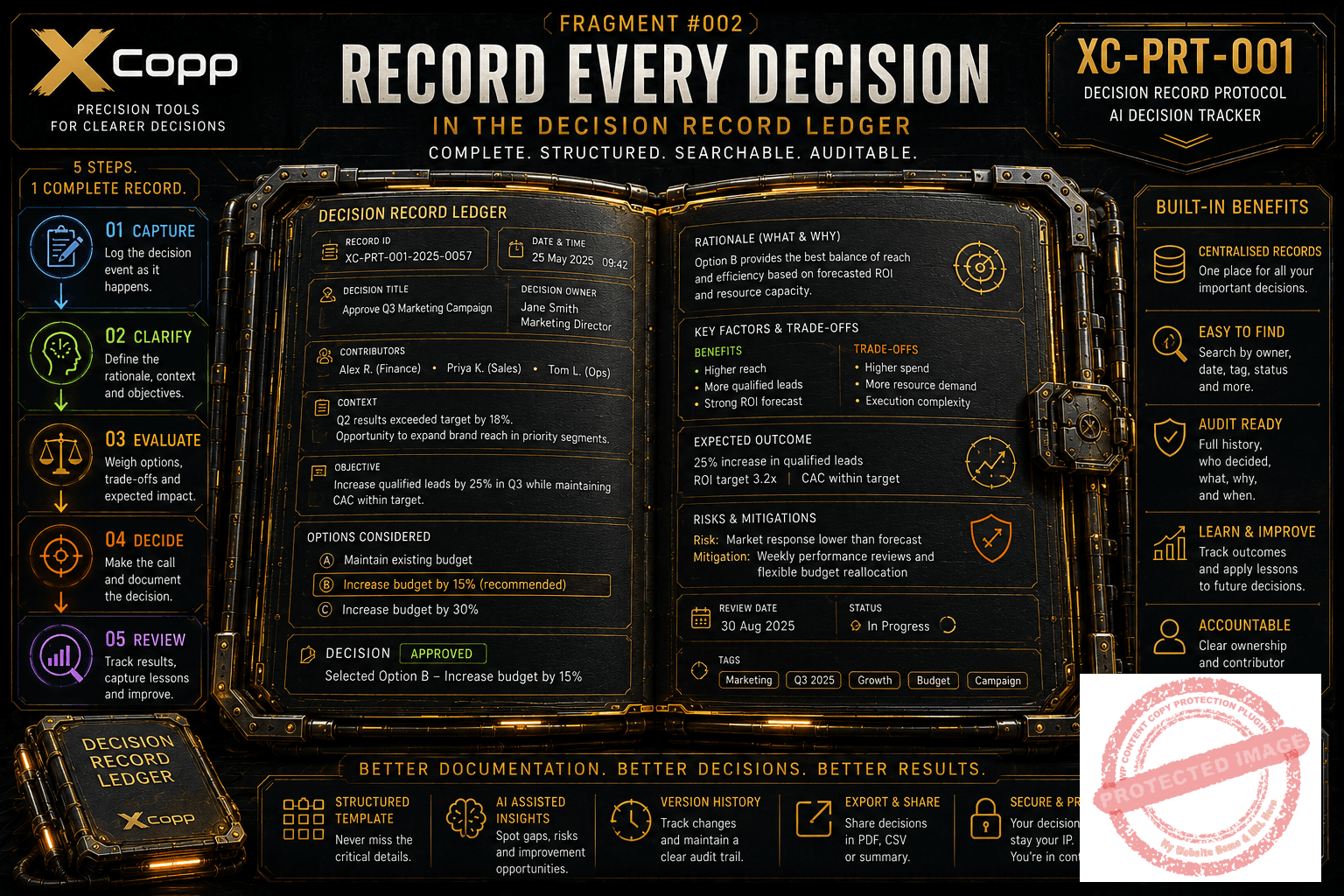
Depending on the decision and supplied context, the protocol helps organise information such as:
Decision — what was actually chosen.
Objective — what the decision is intended to achieve.
Context — the situation in which it was made.
Evidence — information supporting the decision.
Assumptions — things believed or inferred but not fully established.
Alternatives — other options considered.
Reasoning — why the selected option won.
Risks and trade-offs — what the decision costs or exposes.
Review triggers — what new evidence or change could justify reconsideration.
Next action — what happens because of the decision.
Why bother recording all that?
Because a decision without its reasoning becomes surprisingly fragile.
Six months later a reasonable decision can look completely irrational if the original constraints and evidence have disappeared.
Or the opposite happens: an old decision continues being followed long after the conditions that justified it have changed.
A decision record gives you something better than memory:
a traceable decision history.
Use it for
- AI-assisted projects;
- business decisions;
- product development;
- website and technology choices;
- project architecture;
- operational changes;
- research conclusions;
- purchases and tool selection;
- strategy;
- collaborative work;
- long-running personal projects.
Not every tiny choice deserves a formal record.
Use it when forgetting the reasoning could create rework, confusion, contradiction or unnecessary expense later.
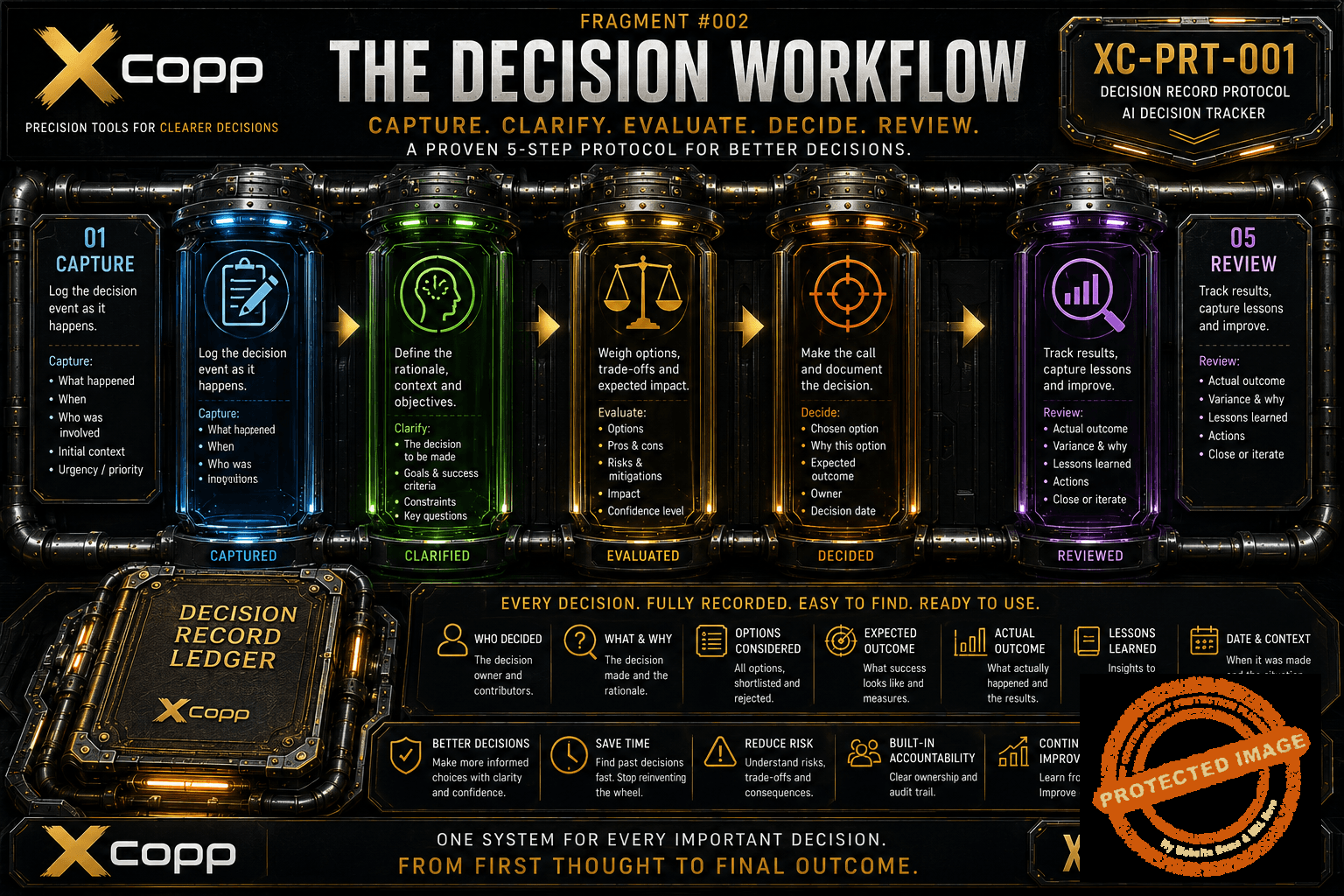
How it works
1. Open the included instructions.
2. Give the protocol the decision and relevant context.
3. Separate evidence from assumptions and unknowns.
4. Record the options, reasoning and trade-offs.
5. Define the decision and next action clearly.
6. Preserve the record with the project.
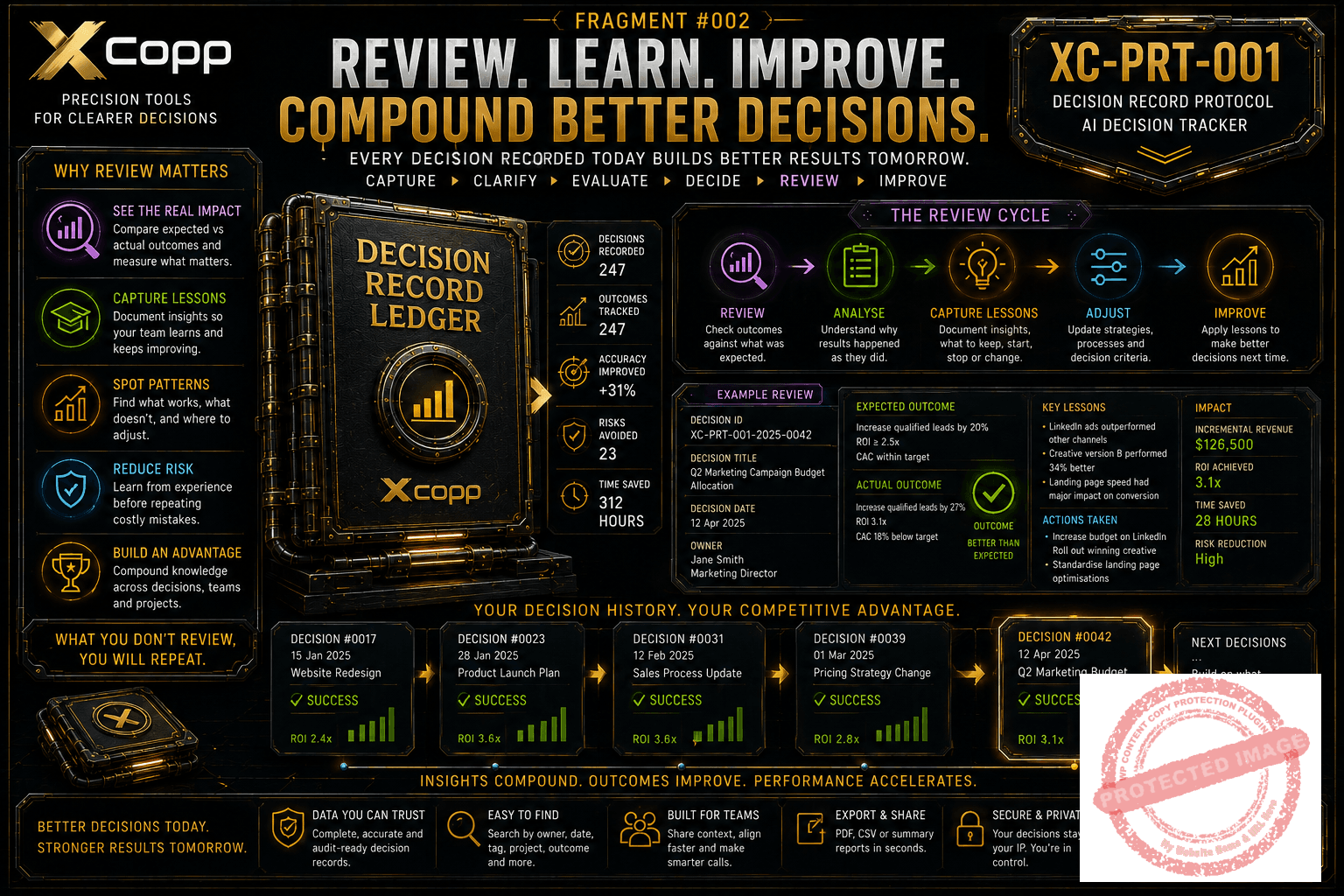
When circumstances materially change, review the record instead of trying to reconstruct the old conversation from memory.
Example
Imagine you’re deciding whether to replace an existing software platform.
Recording only:
“Move to Platform B.”
isn’t particularly useful later.
A proper decision record can preserve:
Objective: reduce operating cost without losing required capability.
Evidence: current pricing, required features and verified compatibility.
Assumption: migration can be completed within the available time.
Alternative: remain on Platform A.
Decision: move to Platform B.
Reason: required functionality is retained while ongoing cost is reduced.
Review trigger: pricing changes, missing capability is discovered or migration cost materially exceeds the estimate.
Now the decision has context.
Designed for AI-assisted work
The protocol can be used alongside capable conversational AI to help structure information you provide.
But AI should not silently invent missing evidence or project history.
If important information is unavailable, it should remain unknown or require verification rather than being conveniently filled in.
That’s important because confidence should never silently become evidence — a principle built into XCopp’s own decision architecture. XCopp OS(2).txtTXT
Do I need technical knowledge?
No specialist AI or coding knowledge is required.
Follow the included guidance and use the supplied structure.
What this isn’t
This isn’t bureaucracy for the sake of bureaucracy.
You don’t need to document every choice you make.
The protocol is for decisions where preserving the reasoning has genuine future value.
Record what earns remembering.
Make important decisions reusable.
Don’t preserve only the answer.
Preserve why the answer made sense.

Reviews
There are no reviews yet.