How to Build Online Projects That Actually Work (No Fluff, Just Systems)

Your Project Isn’t Failing — It’s Just Not Built Properly

Most people don’t fail because they’re lazy.

They fail because they’re building without a system.

You’ll see it everywhere:

  • starting projects with good intentions
  • putting in real effort
  • trying different strategies
  • following advice from YouTube or blogs

And still… nothing sticks.

No traction. No clarity. No real progress.

Not because the work isn’t happening — but because the work isn’t connected.

It’s random.

And random effort doesn’t compound.

If you’re trying to build online projects that actually go somewhere, this is the shift you need to make:

Stop building pages. Start building systems.

That’s what this guide is going to show you.

If you want the full picture of how this fits into the XCopp ecosystem, start here:

Start Here

messy online project setup with no system or structure

The Real Problem: You’re Stuck in a Loop

Most online projects don’t fail instantly.

They fade out.

And they fade out for one reason:

there’s no structure holding them together.

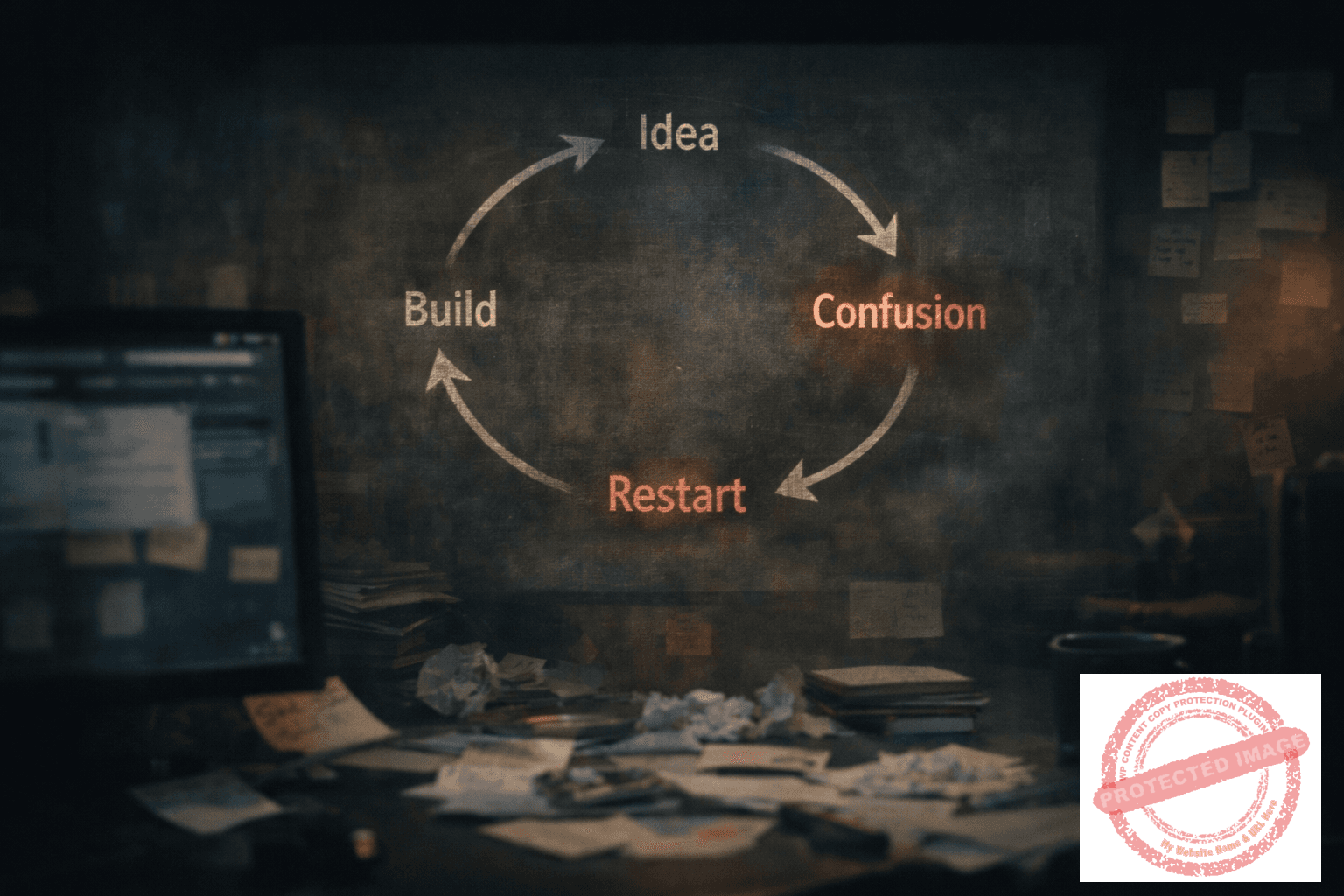
What actually happens looks like this:

  • you get an idea
  • you start building
  • you hit confusion
  • you try something else
  • you lose direction
  • you restart

That loop repeats over and over again.

Not because you’re incapable — but because nothing is connected.

You’re making decisions in isolation.

Each post, each page, each idea… built without a system behind it.

So instead of progress stacking, everything resets.

Effort goes in. Nothing compounds.

This is where most people get stuck.

They think they need:

  • a better idea
  • a better niche
  • a better strategy

They don’t.

They need structure.

Because without structure:

  • content becomes random
  • direction disappears
  • motivation drops
  • projects stall

And eventually… they quit.

If you recognise this pattern, you’re not the problem.

The way you’ve been building is.

cycle of failed online projects showing repeated restart loop
Most projects don’t fail once — they repeat the same loop

If you want to break out of this loop, you need to understand what a project is actually supposed to do.

That’s where most people have it wrong.

What “Working” Actually Means (Most People Get This Wrong)

Most people think a project is “working” if it looks good.

A clean website. A few posts. Maybe even some traffic.

But none of that actually tells you if the project is working.

Because appearance isn’t progress.

A project is only working if it does something measurable and repeatable.

Here’s what that actually looks like:


1. It Attracts the Right People

Not just traffic.

Relevant traffic.

People who are actively searching for what you’re building.

People who recognise the problem you’re solving.

If your content is pulling in random visitors, the system is misaligned.

That’s not growth. That’s noise.


2. It Solves Something Real

Every piece of content should do a job.

Answer a question. Fix a problem. Clarify confusion.

If someone reads your page and still doesn’t know what to do next, the page failed.

Useful content moves people forward.


3. It Builds Trust Over Time

Trust isn’t built in one visit.

It’s built through consistency.

Clear thinking. Honest writing. No hype.

When someone lands on multiple pages and the thinking holds up each time, trust compounds.

That’s when people start paying attention.


4. It Connects Into a Bigger System

This is the one most people miss.

Individual pages don’t win.

Connected systems do.

Your content should lead somewhere:

  • from one idea to the next
  • from surface understanding to deeper clarity
  • from reading to action

That’s how both users and search engines understand your site.

If pages are isolated, they don’t build momentum.

They just sit there.


5. It Improves Over Time (Not Stays Static)

A real project evolves.

You refine pages. Expand ideas. Improve structure.

You don’t just publish and move on.

You build, observe, and adjust.

That’s how small projects turn into strong ones.


The Shift: You’re Not Building a Website

You’re building something much bigger.

A system that captures knowledge, structures it, and delivers it in a useful way.

That’s what allows a project to grow without falling apart.

Inside XCopp, this is treated as a knowledge engine.

Where:

  • ideas turn into content
  • content turns into structured knowledge
  • knowledge connects into systems
  • systems support real projects

Everything builds on top of everything else.

Nothing is wasted.


If It’s Not Doing This, It’s Not Working

This is where you need to be honest.

If your project:

  • isn’t attracting the right people
  • isn’t solving anything clearly
  • isn’t building trust
  • isn’t connected

Then it’s not “early”.

It’s unstructured.

And until that changes, nothing compounds.

The good news is:

This is fixable.

But only if you stop treating your project like a collection of pages…

and start treating it like a system.

The System Shift: Stop Building Projects — Start Building Systems

Up to this point, most people are building like this:

idea → page → hope it works

There’s no structure behind it.

No connection between pieces.

No long-term direction.

That’s why nothing compounds.

To build something that actually works, you need to make a fundamental shift:

you are not building a project — you are building a system.


What This Shift Actually Means

A project is fragile.

It depends on individual pages performing well.

If something doesn’t work, everything feels like it’s failing.

A system is different.

It’s structured, connected, and designed to grow over time.

Instead of relying on single pieces, the system works as a whole.

Each part supports the others.

Each layer has a role.

That’s how momentum is created.


The XCopp Model (Simple, But Powerful)

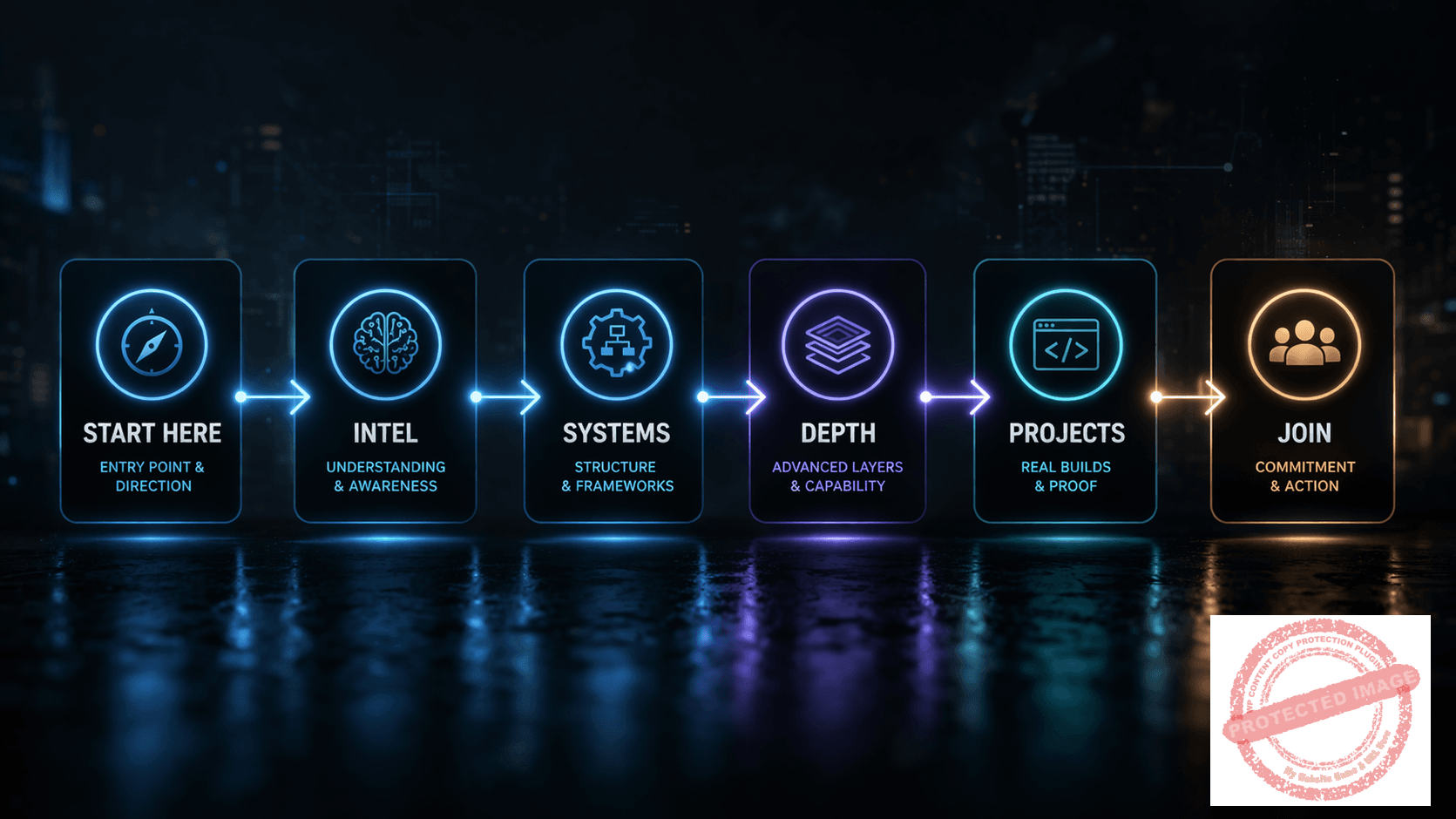
Inside XCopp, every project is built using a structured flow:

Start Here → Intel → Systems → Depth → Projects → Join

This isn’t just navigation.

It’s how thinking, content, and action are organised.


1. Start Here (Entry Point)

This is where everything begins.

It answers:

  • what this project is
  • who it’s for
  • what to do next

Without this, people land… and leave.

Start Here is the anchor.


2. Intel (Understanding Layer)

This is where ideas are explained clearly.

No fluff. No noise.

Just real thinking, broken down so people can understand what’s actually going on.

It gives the reader context.

Intel builds awareness.


3. Systems (Structure Layer)

This is where things get practical.

Frameworks. Processes. Models.

Not theory — structure.

This is where people start seeing how things actually work.

Systems builds clarity.


4. Depth (Fragments, DataDumps, BlackBoxes)

This is where the deeper layers live.

Not everyone will go here — but the serious builders will.

This is where surface understanding turns into capability.


5. Projects (Proof Layer)

This is where the system becomes real.

Actual builds. Real examples. Working outputs.

Not theory — evidence.

Projects builds trust.


6. Join (Commitment Layer)

This is the next step.

Not just reading — building.

People who reach here are ready to move.

Join is where the system turns into action.


Why This Structure Changes Everything

Most sites are flat.

Just pages sitting next to each other.

No hierarchy. No direction.

This model fixes that.

It creates:

  • clear entry points
  • guided progression
  • deeper learning paths
  • strong internal linking

Which means:

  • users stay longer
  • understanding improves
  • trust builds faster
  • search engines understand the structure

Everything starts working together instead of fighting itself.


structured online project system flow from start to execution
A system turns scattered effort into structured progress


This Is the Difference Between Effort and Progress

You can work hard on a broken structure and get nowhere.

Or you can build a system where every piece adds to something bigger.

That’s the difference.

Once this clicks, you stop guessing.

You stop jumping between ideas.

You start building something that actually holds together.

And that’s when things begin to move.

The 5-Part Build System (How to Actually Do This)

Now you understand the problem.

You understand the shift.

This is where most content stops.

This is where we actually build.

Here’s the system you follow:


1. Start With a Real Problem (Not a Trend)

This is where everything either works… or breaks.

Most people start with:

  • trending ideas
  • “profitable niches”
  • something they saw working for someone else

That’s unstable from the start.

You don’t understand the problem deeply enough to build around it.

Instead, start here:

  • something you’ve personally struggled with
  • something you’re actively working through
  • something you can explain clearly

If the problem is real, the content will be real.

And real content is what actually builds trust.


2. Build a Clear Entry Point (Your “Start Here” Page)

Without a clear entry point, people get lost immediately.

They land on a random post… and leave.

Your Start Here page fixes that.

It should answer three things fast:

  • what this project is about
  • who it’s for
  • what to do next

This becomes the anchor of your entire system.

If you don’t have this, everything else becomes harder.

Start Here


3. Build Structured Content Layers (Not Random Posts)

This is where most projects fall apart.

They publish content with no structure behind it.

You need layers.

Inside XCopp, that looks like this:

  • Intel → explain ideas clearly
  • Systems → show how things work
  • Depth → go deeper (Fragments, DataDumps, BlackBoxes)

Each layer has a job.

Each piece of content fits somewhere.

Nothing is random.

Explore the structure:

Intel → understanding
Systems → structure
DataDumps → depth


4. Connect Everything (Internal Linking System)

This is where projects start to grow.

Not from writing more — from connecting what you’ve already built.

Every piece of content should:

  • link back to core pages
  • connect to related ideas
  • guide the reader forward

This does two things:

  • helps users move through your system
  • helps search engines understand your structure

Without this, your content stays isolated.

And isolated content doesn’t rank, grow, or convert.

With this, your site becomes a connected system.

That’s where momentum comes from.


5. Build → Observe → Document → Improve

This is the loop that makes everything compound.

Most people publish… and move on.

That’s why nothing improves.

Instead, you:

  • build real things
  • observe what happens
  • document what you learn
  • improve the system

This turns your project into a living system.

Every post gets better.

Every idea connects.

Every iteration strengthens what you’ve already built.

This is how small projects turn into real assets.


This Is What Most People Skip

They want results… without structure.

Traffic… without systems.

Growth… without clarity.

It doesn’t work like that.

This system is simple — but it’s not optional.

If you follow it, your project starts to hold together.

If you ignore it, you stay in the loop from Section 2.

The choice is simple.

Keep guessing… or start building properly.

Why Most People Never Get This Far

At this point, the system is clear.

The steps aren’t complicated.

So why do most people never build something that actually works?

Because this isn’t just a strategy problem.

It’s a behaviour problem.


1. They Chase Tactics Instead of Building Systems

Most people are stuck in tactic mode.

They jump between:

  • SEO tricks
  • content hacks
  • new tools
  • “what’s working right now”

None of that fixes the core issue.

Tactics without structure don’t compound.

They give short bursts of activity… then disappear.

That’s why progress feels inconsistent.


2. They Don’t Stick With One Direction Long Enough

Every time something feels slow, they switch.

New idea. New niche. New plan.

Which resets everything.

Search engines need consistency.

Systems need time to develop.

Constant restarting kills momentum.


3. They Build Without Understanding

They follow steps without knowing why they’re doing them.

Copy what they see.

Replicate surface-level actions.

But when something breaks, they don’t know how to fix it.

Because there’s no underlying structure.

Understanding is what makes a system stable.

Without it, everything stays fragile.


4. They Expect Results Too Early

This is where most people quit.

They expect:

  • traffic in weeks
  • growth without structure
  • results without consistency

But real projects don’t work like that.

They build slowly… then compound.

The early phase is quiet.

That’s where the system is being built.


5. They Never Fully Commit

This is the hardest truth.

Most people stay half-in.

Testing. Dabbling. Trying.

But not fully committing to building something properly.

And without commitment, the system never gets finished.

Which means it never gets a chance to work.


This Isn’t About Intelligence — It’s About Discipline

The people who make this work aren’t smarter.

They don’t have secret knowledge.

They just:

  • pick a direction
  • build with structure
  • stay consistent
  • improve over time

That’s it.

No shortcuts. No hacks. No noise.


The Reality Most People Avoid

You don’t need more information.

You don’t need another strategy.

You don’t need a better idea.

You need to build properly — and stick with it.

That’s the difference between people who stay stuck…

and people who actually create something that works.

The Long-Term Advantage (Where This Actually Leads)

If you build like most people, everything resets.

New idea. New content. New attempt.

No connection. No carry-over.

No real progress.

But when you build with a system, something different happens.

Your work starts to stack.


1. Content Starts Compounding

Each piece you create isn’t isolated.

It connects.

Supports other pages.

Strengthens the system.

Instead of writing more to keep up…

your existing content becomes more valuable over time.

That’s the shift.


2. Authority Builds Naturally

You don’t need to pretend to be an expert.

You become one through structured output.

Because you’re:

  • explaining real problems
  • documenting real builds
  • connecting ideas clearly

Over time, that creates:

  • trust
  • clarity
  • recognition

Authority isn’t claimed — it’s built.


3. Your Site Becomes Easier to Grow

Most people struggle to figure out what to do next.

Because there’s no structure guiding them.

With a system:

  • you know what content to create
  • you know where it fits
  • you know how it connects

Which means:

growth becomes predictable.


4. Small Wins Turn Into Real Assets

A single post doesn’t change much.

But a connected system of content does.

Over time, you build:

  • a structured knowledge base
  • a growing content network
  • a platform that actually holds value

That’s the difference between content… and assets.


5. You Stop Starting Over

This is the biggest one.

Most people are stuck in restart mode.

Every few months:

  • new idea
  • new direction
  • new attempt

Nothing compounds.

Nothing sticks.

With a system:

you build on what already exists.

Which means every step forward actually counts.


connected content system growing and expanding over time
When content connects, growth compounds


This Is How You Build Something That Lasts

Not through bursts of effort.

Not through chasing tactics.

Not through constant reinvention.

Through structure, consistency, and connection.

That’s what turns a small project into something real.

And that’s what most people never experience — because they never build this way.

The Final Shift: Stop Asking “What Should I Post?”

Most people approach online projects with the wrong question.

“What should I post next?”

That question keeps you stuck in reactive mode.

It keeps you chasing ideas.

It keeps your content disconnected.

And it keeps you rebuilding instead of progressing.


The Question That Actually Moves You Forward

Replace it with this:

“What system am I building?”

That one shift changes everything.


Why This Matters

When you think in posts:

  • you focus on output
  • you chase ideas
  • you build randomly

When you think in systems:

  • you focus on structure
  • you build with direction
  • you connect everything you create

One creates noise. The other creates momentum.


What This Looks Like in Practice

Before creating anything, you ask:

  • Where does this fit?
  • What does it connect to?
  • What role does it play?

If it doesn’t fit the system, you don’t build it.

Simple.


This Is the Line Most People Never Cross

They keep producing content.

But they never build a system behind it.

So nothing holds.

Nothing compounds.

Nothing lasts.

You don’t need more effort.

You need alignment.

Structure turns effort into progress.


Once This Clicks, Everything Changes

You stop guessing.

You stop jumping between ideas.

You stop asking what to do next.

Because the system tells you.

And when the system is clear…

progress becomes inevitable.

What To Do Next (If You’re Serious About Building Something That Works)

You’ve seen the problem.

You understand the system.

You know what most people are doing wrong.

Now it comes down to one thing:

Are you actually going to build this properly?


Step 1 — Start With Clarity

If you haven’t already, begin here:

Start Here

This will give you a clear entry point into the XCopp system.

No confusion. No guesswork.


Step 2 — Understand How This Actually Works

Before building, make sure your thinking is aligned.

Go deeper into:

Intel → understand the ideas
Systems → see the structure

This is where things start to click properly.


Step 3 — See Real Builds

Don’t stay in theory.

Look at how this works in practice:

Projects

This is where the system becomes real.


Step 4 — Go Deeper (If You’re Serious)

If you want to build properly, not just understand:

Fragments → quick tactical moves
DataDumps → deeper thinking
BlackBoxes → full execution systems

This is where most people drop off.

Because this is where the real work starts.


Step 5 — Commit to Building

At some point, you stop reading.

You stop researching.

You stop planning.

And you build.

If you’re ready for that step:

Join XCopp

This is where everything connects.

Not just content — but actual progress.


person walking forward on a clear path representing building progress
Progress starts when you commit


This Only Works If You Do

No system fixes inaction.

No framework replaces discipline.

No strategy works if you don’t apply it.

You now have:

  • the structure
  • the system
  • the path forward

The rest is on you.

Build it properly.

And it will work.

Leave a Comment

Shopping Basket