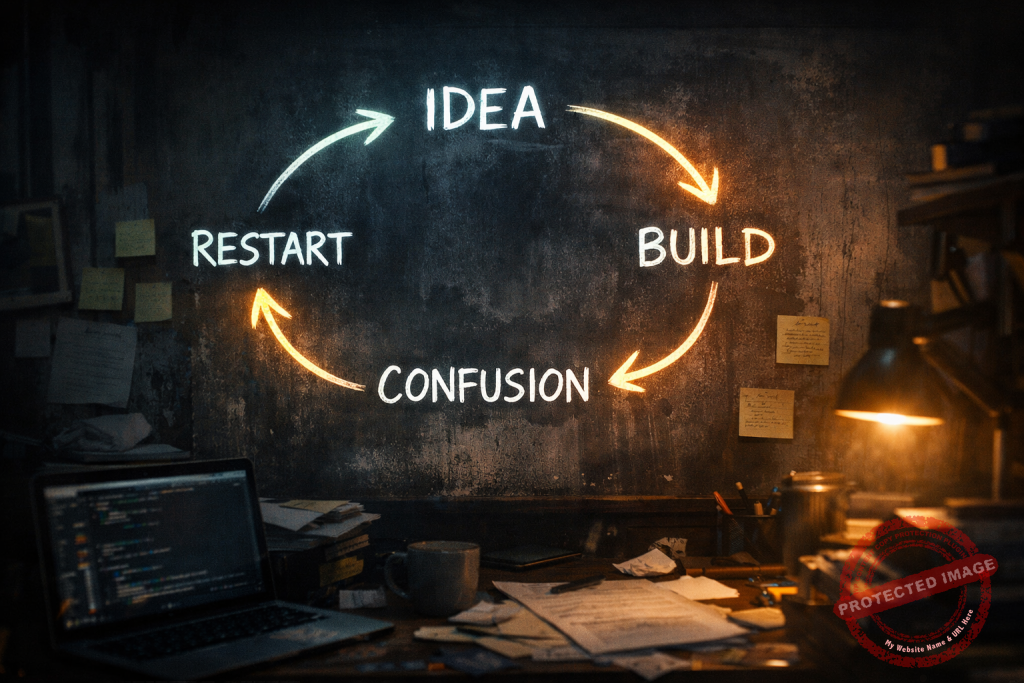
How to Turn Ideas Into Projects With a Simple System
Most people do not struggle with ideas.
They struggle to turn ideas into projects.
Notes pile up.
Ideas get saved.
Plans get started, then quietly abandoned.
Not because people are lazy.
Because there is no system converting thought into execution.
You do not have an idea problem.
You have an execution gap.
If everything feels scattered, start with the XCopp System Starter first:
Why Ideas Don’t Become Projects
Ideas feel productive.
They feel like progress.
But an idea is not progress.
It is potential.
Potential only becomes useful when it is structured, tested, and built into something real.
That is where most people get stuck.
They keep collecting ideas because collecting feels safer than executing.
Execution exposes gaps.
Execution creates friction.
Execution makes the work real.
And that is exactly why it matters.
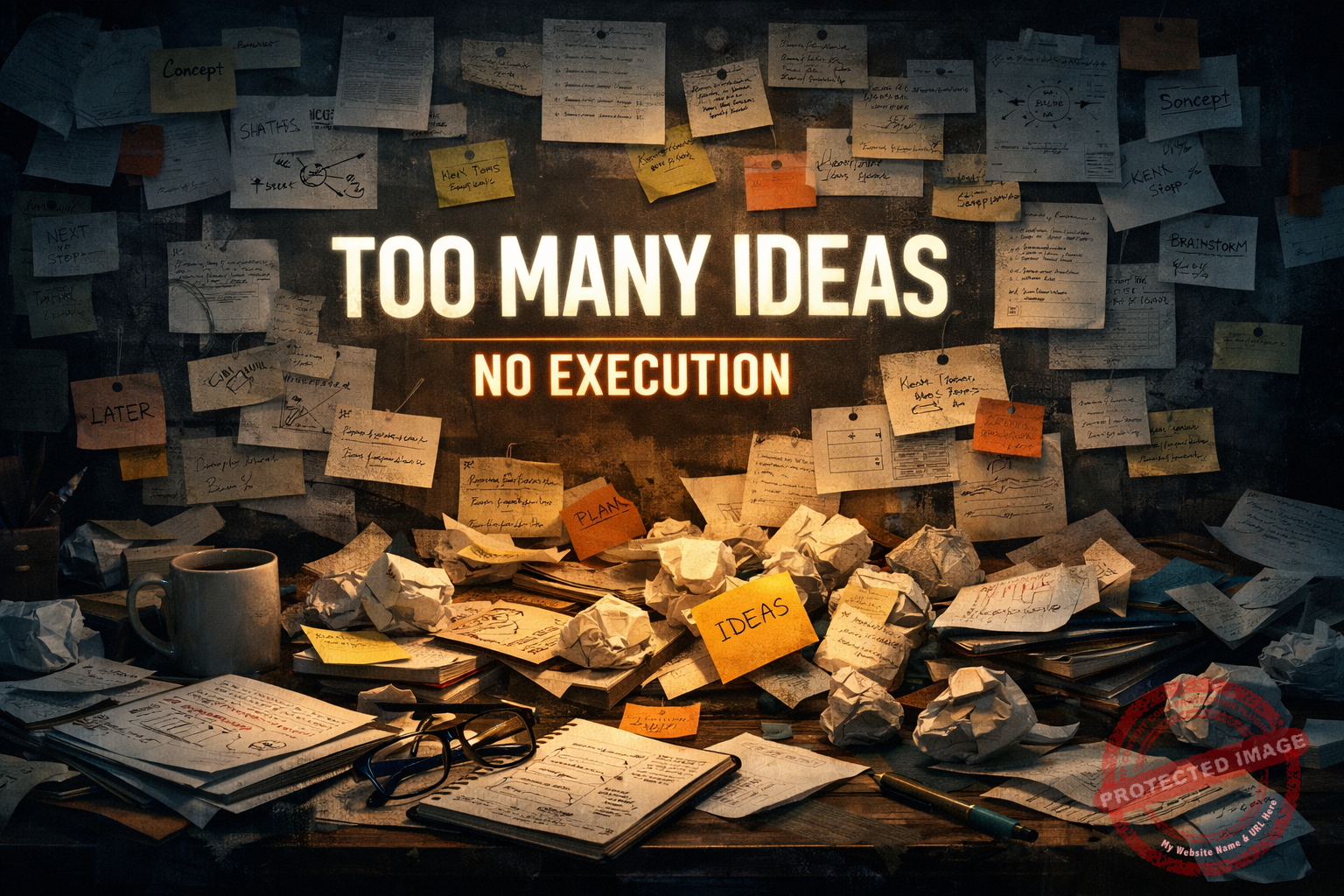
The Idea Hoarding Loop
Most people are not short of inspiration.
They are drowning in it.
The loop usually looks like this:
- capture an idea
- think about it
- add more notes
- delay starting
- move on to the next idea
That becomes the idea hoarding loop.
It feels useful.
It feels like preparation.
But nothing actually gets built.
Stored ideas do not compound unless they become structured action.
This is the same pattern that causes many online projects to stall completely:
Why Most Ideas Never Become Real Projects
This is not random.
There are clear reasons ideas keep dying before they become anything useful.
1. There Is No Conversion System
Ideas exist, but there is no pathway.
No filter.
No sequence.
No structure.
So the idea sits in a note, folder, app, or notebook.
Without a system, ideas stay as ideas.
2. There Is No Clear Starting Point
People do not know where to begin.
So they delay.
They overthink.
They research more than they build.
Then the idea loses energy.
Clarity creates movement.
3. Overthinking Replaces Building
Planning feels safe.
Building feels uncertain.
That is why people stay in planning mode.
They keep refining the idea, but never create anything that can be tested.
Execution always beats theoretical perfection.
4. There Is No Structure to Hold Progress
Even when people start, the work often collapses.
Not because the idea is bad.
Because there is nothing holding the project together.
No connected pages.
No clear content layers.
No next step.
No system.
Structure is what keeps progress alive when motivation dips.
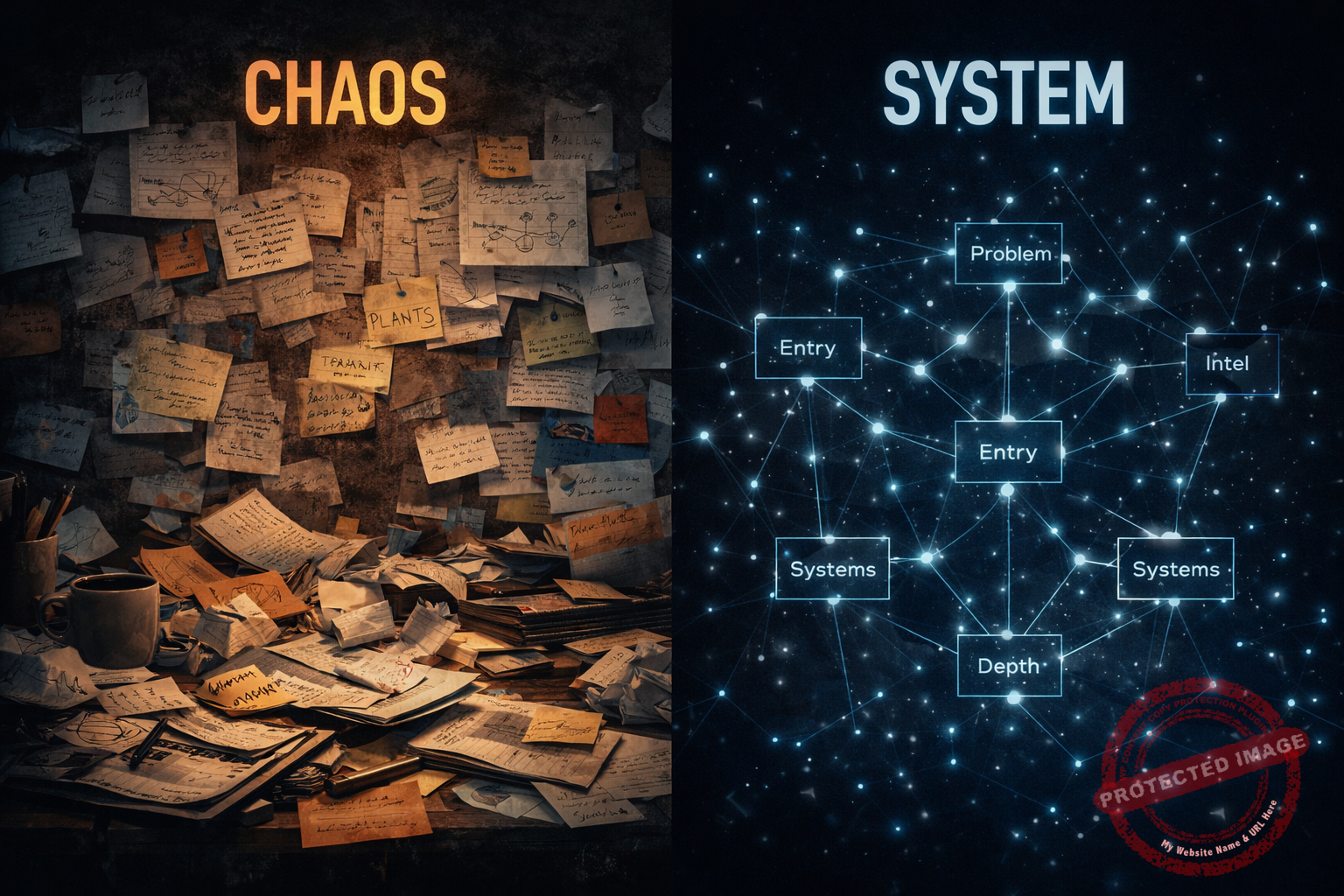
The Shift: Ideas Are Input, Not the Outcome
This is where everything changes.
You stop treating ideas as the thing you are building.
Ideas are not the outcome.
They are raw input.
The outcome is a working project.
Instead of asking:
“How do I use this idea?”
Ask:
“How does this idea fit into a system?”
That question forces clarity.
It makes you decide whether the idea belongs, where it connects, and what job it should do.
This is how you move from scattered thinking to structured building.
If you need the full project-building framework, read this next:
How to Build Online Projects That Actually Work
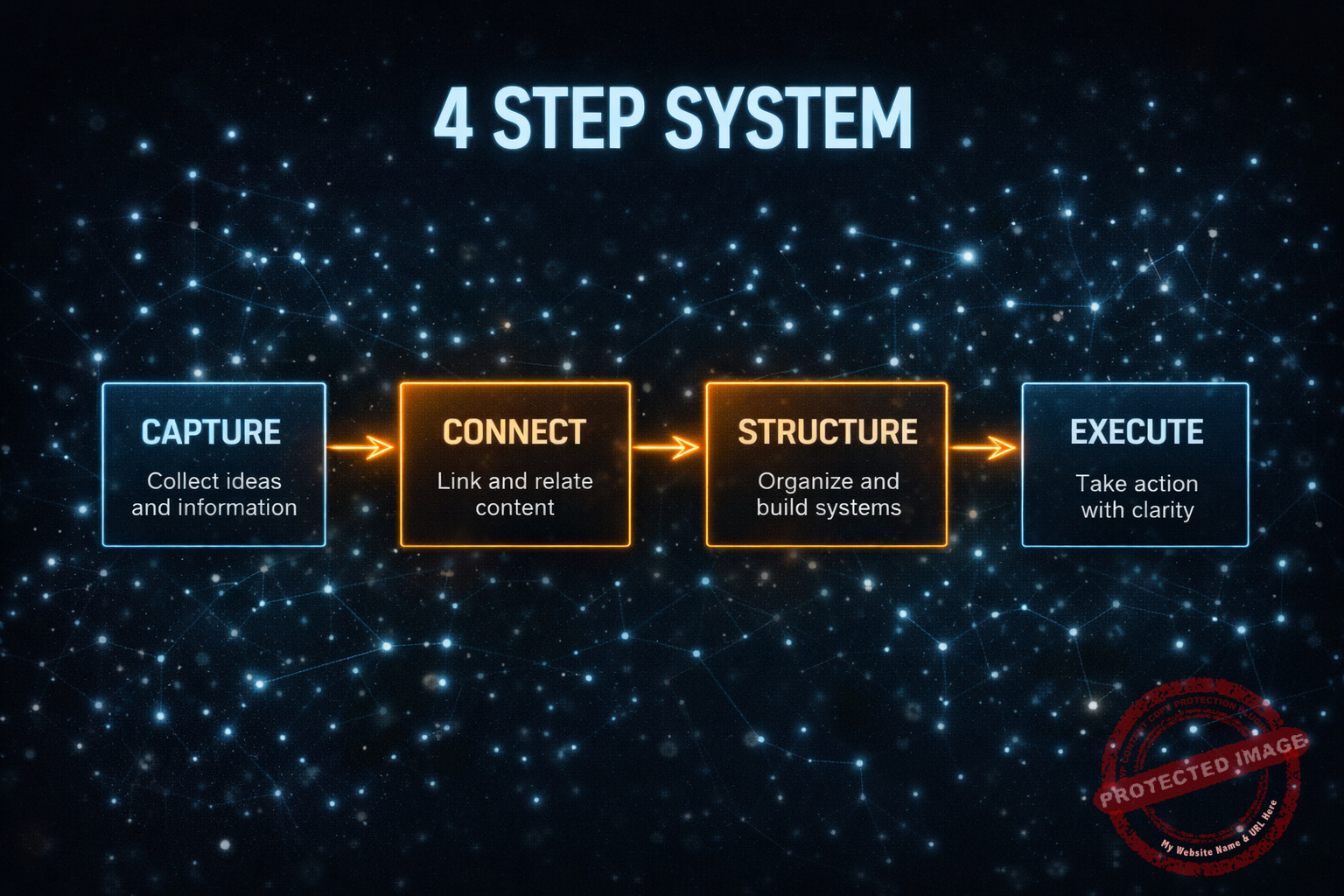
The Idea → Project Conversion System
This system is simple.
That is the point.
It gives every idea a path.
Step 1 — Define the Problem
Most people start with ideas.
You start with problems.
Because problems create direction.
Ask:
- what problem does this idea solve?
- who is it for?
- why does it matter?
- what changes after it exists?
If you cannot answer those clearly, the idea is not ready to become a project.
If the problem is unclear, the project will be unclear.
Step 2 — Create the Entry Point
Every project needs a starting point.
A place where someone can land and understand what they are looking at.
It should explain:
- what this is
- who it helps
- what to do next
Inside XCopp, this role is handled by:
The entry point stops people getting lost.
It gives the project a front door.
Step 3 — Build Structured Content Layers
Random content does not build a project.
Structured content does.
Use layers:
- Intel — explain the problem and thinking
- Systems — show the structure and framework
- Depth — expand into deeper resources and tools
That way, the project is not just a pile of posts.
It becomes a connected knowledge system.
Explore the layers here:
Step 4 — Connect and Expand
This is where growth begins.
Not from more ideas.
From better connection.
Link pages together.
Create paths.
Guide movement.
Make each piece support the next.
If it does not connect, it does not compound.
Step 5 — Build, Observe, Improve
This is the part most people skip.
They either over-plan before building, or publish once and never refine.
Neither works.
The proper loop is:
- build a useful version
- observe what happens
- document what you learn
- improve the system
That is how small ideas become real assets.
Not overnight.
Through structure, discipline, and correction.
What This Looks Like in Practice
Take a simple idea:
“I want to build a site about digital systems.”
Most people would:
- write random posts
- test random ideas
- change direction when it feels slow
- get stuck
Using the system, you do something different:
- define the problem — people are overwhelmed by scattered digital work
- create the entry point — a page that explains the system clearly
- build content layers — Intel, Systems, and deeper resources
- connect everything — internal links, guided flow, email capture
- improve over time — based on what actually happens
Now it is not just an idea.
It is a project with structure.
This is also why useful, people-first content matters. Google’s own guidance points toward creating content that genuinely helps people, not pages made only to manipulate search results: Google helpful content guidance.
What Changes When You Build This Way
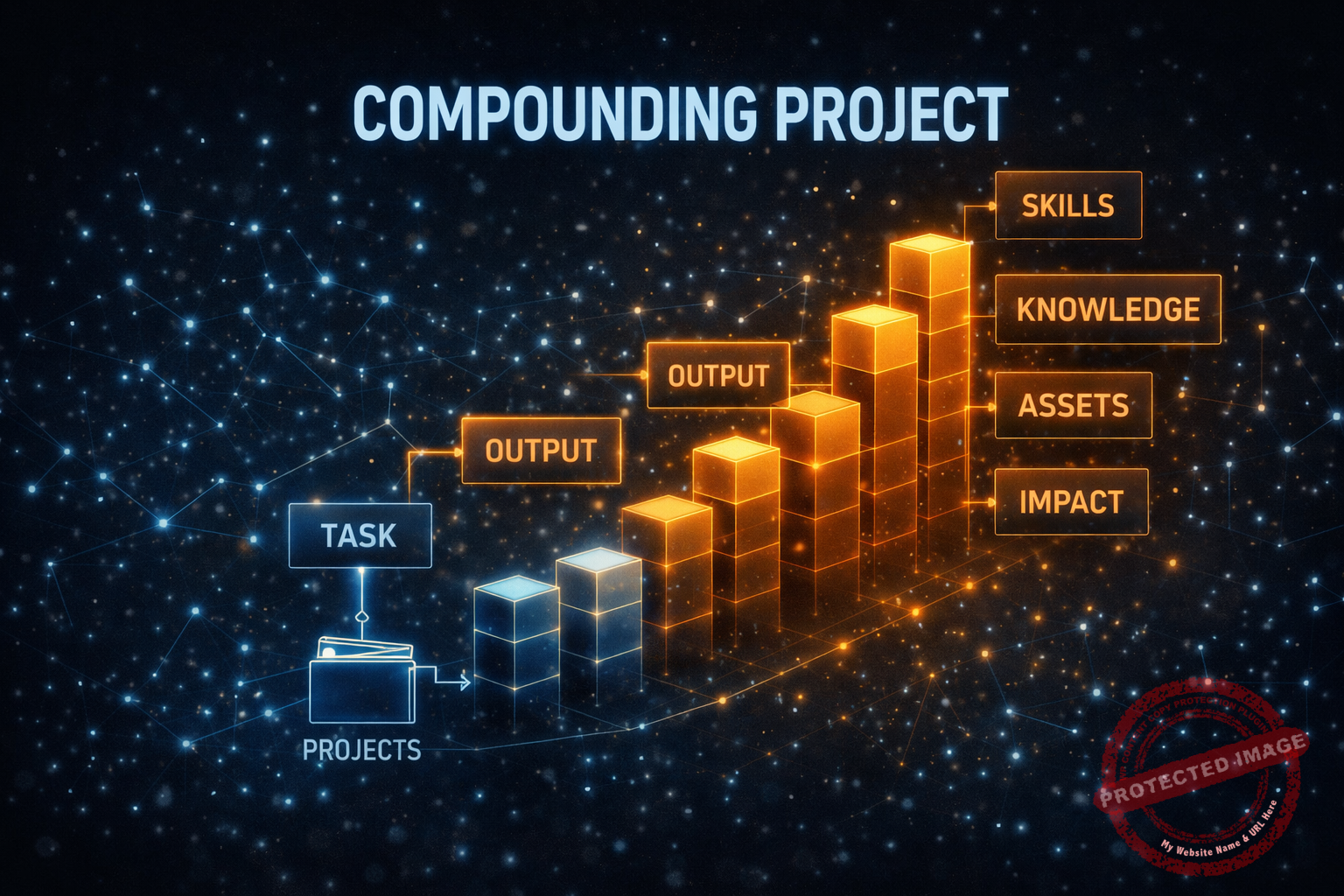
When you learn how to turn ideas into projects, the work changes.
You move from:
- scattered ideas
- random effort
- no direction
- constant restarting
To:
- clear structure
- defined paths
- connected content
- compounding progress
You stop guessing.
You start building properly.
And the work finally has somewhere to go.
The Final Shift
Stop collecting ideas as if collection is the goal.
It is not.
Ideas are seeds.
Seeds matter.
But seeds that never get planted do not feed anyone.
The work is in building.
The responsibility is in execution.
The blessing is in faithful, disciplined action — not endless intention.
Stop collecting ideas.
Start building systems.
What To Do Next
If you are ready to build properly, start with the reset:
Then orient yourself:
Go deeper into the structure:
If you want the wider project-building method, read:
How to Build Online Projects That Actually Work
And if you want to stay connected:
Start With the XCopp System Starter
If your ideas keep piling up but nothing is getting built, this is the cleanest place to begin.
Clear the noise, choose one direction, and take one real next step.
This only works if you build it.